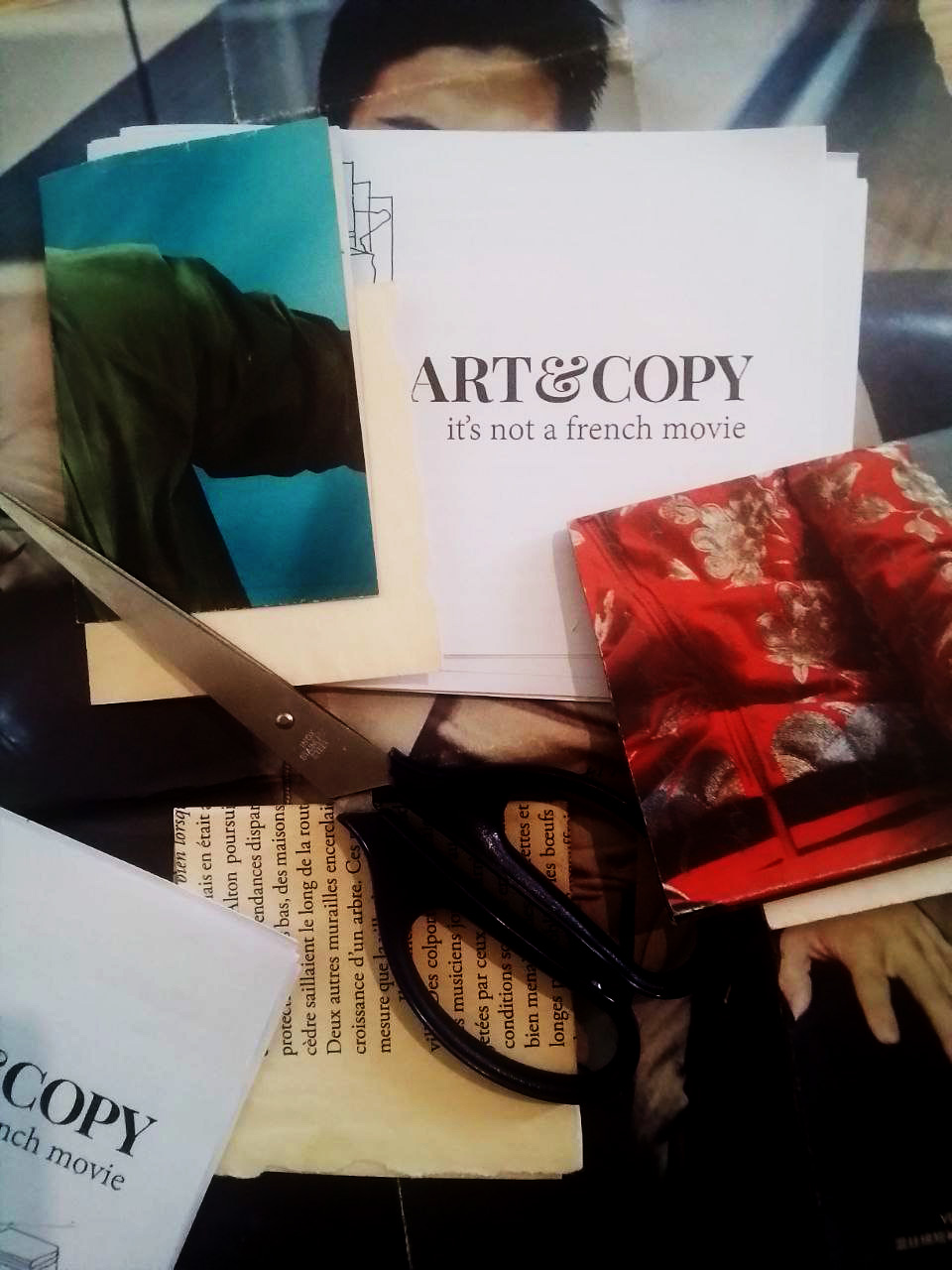
Art & Copy

Art & Copy Zine Club | Make a Zine

Join us for an evening of zine-making, creative experimentation, and DIY publishing. This hands-on workshop invites you to explore the world of zines — small, self-made publications that have long been used to share stories, ideas, art, poetry, politics, personal reflections, fanfic and… anything goes, really.

Collage, drawing, writing, photocopy aesthetics, and simple bookbinding: that’s some of what we’ll cover. Create your own original zines in a relaxed setting. Make something funny, personal, chaotic, or completely experimental. This workshop is a space to try anything, and to play with form and expression.

No prior experience is necessary. All materials will be provided, though participants are encouraged to bring any magazines, photographs, scraps, stickers, writings, or found materials you’d like to incorporate into their work.

The workshop will include:
• An introduction to Art & Copy’s collection of zines and ethos
• Guided prompts and creative exercises
• Time to design, assemble, and make your own zine

Open to artists, writers, students, beginners, and anyone interested in making things by hand and sharing ideas outside traditional publishing spaces.

Come make something personal, strange, political, joyful, messy, thoughtful — or all of the above.

Tickets: USD 20 (includes materials).

Book your spot via credit card*: https://buy.stripe.com/3cI4gzbJC2QPbc50qTbZe0W

The event takes place at this location in TTP every week. You can find the next time and day when you message us. Message via Telegram @makezines

*Or, ABA. For ABA payment link, message via Telegram @makezines

Standard
writing

A Punjabi story #2

The poster announcing Kanishka.

Wrote this in 2017, on this day.


TODAY, I’m writing to share a bit of good news about a book of Kismuth’s. I mentioned about it earlier, in this post, but I’d like to expand a bit now.

I wanted to tell you more about the writing and sharing of Kanishka, the pre-quel to The Elopement.

SERIAL. Kanishka‘s first chapter, ‘Orange Juice’, appeared this month in print in the magazine Preet Lari. That was the magazine that hosted me when I was researching the book, as they have a cool co-living program in a village outside of Amritsar. Preet Lari, I understand, will publish all of Kanishka as a serial, monthly. I understand that this usually 100% Punjabi-language magazine has never published anything in English, yet, but has been dancing around with the idea. For a while. They are generations old.

I know from firsthand conversations with my dear friend and editor PS that this was a huge, huge step. And it’s Kanishka. Mesmerizing, to me, because I am floored to think that people in that region of the world who, for thirty years, have also been wondering what happened, will be able to connect with my story, I hope. In some way. From another angle. I wonder if this will circle back, in some way, again, there is only some of most that we can touch, and tap, right? And we can discover something new, together. All this. Connexion. Writing for it. Intrigued by the way the publishing world has changed, such that we can communicate n:n, across time, space and distance.


Standard
essays, kismuth members, space, vignettes, writing

DOKK1


On this day in 2017, I published this. HT AP!


image

TODAY, a guest post by Aske Pedersen from Aarhus, Denmark.

(English version here.)

Frygt og Lykke

JEG ER BANGE. Ikke for mørke, højder eller for at dø. Nej, jeg er bange for ikke at slå til, at være utilstrækkelig, og derfor foregår der en konstant kamp indeni mig. En kamp mellem frygt og lykke. Et eksempel er frygten for at udleve mine passioner.

Når folk spørger mig, hvad jeg virkelig godt kan lide, siger jeg næsten altid at skrive. Men hvorfor har jeg så ikke rørt tasteturet i snart et år? Jeg ved, at det gør mig glad, men noget holder mig alligevel tilbage. En del af min identitet og selvforståelse er bygget op omkring forestillingen om, at jeg er god til at skrive. Hvad sker der med mig, hvis forestillingen ikke holder? Hvis jeg virkelig giver det bedste jeg har, men det bare ikke er godt nok. Denne frygt holder mig fanget i en magtesløs og narcisistisk stilstand, hvor jeg gemmer mig for frygten og udskyder konfrontationen. “I dag er jeg træt, jeg skriver i morgen. I morgen har jeg travlt, men der er tid i næste uge.” Næste uge bliver til næste måned, og næste måned bliver til næste år. Frygten vinder kampen, og min selvfølelse bliver baseret på en løgn, som jeg ikke længere tror på. Men der er sket noget i kampen mellem frygt og lykke. Jeg skriver.

I virkeligheden handler det ikke om at skrive, men om at åbne mig op for andre mennesker. Og for mig selv. For at gøre dette, er jeg nødt til at smide min facade, mit uigennemtrængelige skjold af forsvarsmekanismer, og hvad sker der, hvis modparten ikke kan lide det den ser? Noget af det mest uhyggelige er at gøre sig sårbar, blot for at blive såret. Denne frygt holder mig fra de mest spændene samtaler, nye venskaber, kærester og evnen til at kunne elske rigtigt. I mødet med andre mennesker vælger jeg den nemme vej, hvilket for mig, er humoren. Ironi er blevet en så stor del af mig, at grænserne er blevet udhviskede. Jeg ved ikke længere, hvornår jeg er ironisk, og hvornår jeg ikke er. Måske har alt jeg siger en grad af ironi, hvilket betyder, at jeg kan sige stort set alt. Men mister mine ord så ikke betydning?

Det er ikke kun det jeg siger, det er også måden jeg lytter på. Ofte tager jeg mig selv i at udtænke mit næste svar, før modparten er færdig med at tale. På den måde er jeg sikker på at undgå den akavede stilhed, og samtidig kan jeg fremstå mere intellegent. Dog går der noget tabt i processen. Jeg glemmer at lytte, og jeg formår ikke at se mennesket overfor mig. I stedet kommer samtalen til at foregå på mine præmisser og ofte til at handle om mig. Måske er jeg nutidens narkissos, eller måske er jeg bare bange, eller måske er det én og samme ting.

Hvis man koger det ned, handler det om at tage den sikre vej i samværet med andre mennesker. I samtalen kommer vi ind på alle de selvskrevne emner som studievalg, vejret og geografiske placeringer, og så kommer der et par vittige bemærkninger. Bare så det hele ikke bliver for kedeligt. Det er ikke pinligt, ingen er blevet såret og alle har det fint. Fint… Hverken mere eller mindre. Men jeg gider ikke længere have det fint. For når målet er at undgå fiasko, udelukker jeg samtidig muligheden for succes. —AP


Fear and Happiness

I AM AFRAID. Not of darkness, heights or of dying. No, I am afraid of not being enough, of being inadequate. And because of that, there is a constant battle inside of me. A battle between fear and happiness.

An example is the fear to live out my passions. When people ask me what really lights my fire, I almost always say writing. But then why haven´t I touched the keyboard in almost a year? I know that writing makes me happy, but something is still holding me back. A part of my identity and self-understanding is based on the conception that I am good at writing. What happens to me if that conception breaks? If I really give it my best shot, but it´s just not enough. This fear keeps me in a powerless and narcissistic standstill, where I hide from the fear and delay the confrontation. “Today I’m tired, I will write tomorrow. Tomorrow I’m busy, but there should be time next week.” Next week becomes next month and next month becomes next year. Fear is winning the battle, and my self-esteem is based on a lie that I no longer believe in. But something has happened in the battle between fear and happiness. I am writing.

REALLY IT’S NOT AS MUCH about writing, as it is about opening up to other people. And to myself. To do this, I have to throw away my facade, my impervious shield of defense mechanisms, and what happens if the counterpart doesn’t like what it sees? One of the most frightening things is to make yourself vulnerable, only to get hurt. This fear holds me back from the most interesting conversations, new friendships, girlfriends and the ability to really love another person. When meeting other people I choose the easy option, which to me is humor. Irony has become such a big part of me, that the boundaries have become blurry. I no longer know if I’m being ironic or if I’m not. Maybe everything I say has a touch of irony, which means I can say almost everything. But then what significance do my words hold?

It’s not only what I say, it’s also the way I listen. Often I catch myself devising my next answer while the counterpart is still speaking. That way I’m certain to avoid the awkward silence, and at the same time I can appear more intelligent. However something gets lost in the process. I forget to listen and I don’t manage to really see the person in front of me. Instead the conversation happens on my terms and is often centered around me. Maybe I’m the modern day Narcissus or maybe I’m just afraid, or maybe they are one and the same.

IF YOU BOIL IT DOWN, it’s about taking the road of comfort in the companionship with other human beings. In the conversations we go through the even written topics such as education, the weather and geographical locations, and then a couple of jokes are thrown in just so it doesn’t get too boring. Nothing is embarrassing, no one has been hurt and everybody is fine. Fine… No more, no less. But I don’t want to be fine anymore. Cause when the goal is to avoid failure, I exclude the opportunity of success. —AP

Standard
Art & Copy, lazy sunday longreads

Of consequences

[Developmental psychology professor] Monisha Pasupathi says. If you don’t tell, “your memory for that event may be less flexible and give you less chance for growth.” This is basically the premise of talk therapy.

Just as there are consequences to telling, there are consequences to not telling.

If someone is afraid of how people might react to a story, and they keep it to themselves, they’ll likely miss out on the enrichment that comes with a back-and-forth conversation. A listener “may give you other things to think about, or may acknowledge that this thing you thought was really bad is actually not a big deal, so you get this richer and more elaborated memory,”

Read the full story here >

Standard

Art & Copy, ‘It’s Not a French Movie’ | January issue release party #2

[Updated with a New Date]

Created in the conversations in Kampot over the holiday week, it’s a mixture of writing, drawing and bricolage. Line art in the signature style of Dipika Kohli from a December 2014 trip to Kampot is also included, and other surprising tidbits.

WHY THIS ISSUE. Something about crossing over past points on your travels inspired this issue, along with many, many conversations in person with new acquaintances we discovered in the bumping-along mode that is… low-key travel that those who have done it a long time can appreciate. See you at Institut Français du Cambodge. This issue is produced in a very limited edition, and as we already hosted a miniparty on 4 Jan, we only have a few left.

Advance bookings only. The first three guests to book will get a copy of the limited edition zine, ‘It’s Not a French Movie’, to keep.

Art & Copy tickets are USD 15.

Book here… https://buy.stripe.com/14A7sL6pigHF2FzehJbZe0z

ABA is also okay – ask for link.

Exact location meetpoint will only be shared with registering guests, thanks.

There is a French movie, too. A free movie will follow for those who wish to stay and enjoy it… it’s a separate event by the Institut. Le Ciné Pique-Nique // À bout de souffle (Breathless) – Séance en plein air, begins at 6.30pm on the same day). Details are on their site: https://www.ifcambodge.com/community/event-rsvp/?event_id=876

Standard

Marooned Americans II

Want to talk about how things are looking? This is an event for US citizens to process, vent, and connect. Unaffiliated with anything, no need to worry about that. It is the second event in what could become a series, given the state of the ‘union.’

WHO SHOULD JOIN. Anyone who wants to get really straightforward about what they think and feel, with the ease and comfort of a shared cultural context and many reference points plus knowing what it’s like to be far, far away, too.

WHAT YOU GET. Conversation and perhaps some shared sense of knowing we’re not alone, out here. Relaxed vibes. Your ticket comes with a quick game of ‘zine tarot’, and a souvenir to take from the Zine Tarot collection by Dipika Kohli, who will host this event. Reviews

It’s USD 7, payable in advance via ABA. Book before 20 March 5PM for the location information. The event will be held 21 March, at 5PM in TTP.

Standard

Cojournal – ‘Self as Context’

‘Acceptance and commitment therapy’ is new to me as a term, but not a concept.

I got to experience this idea, I think, while in Saigon for twenty months waiting in solitude for the pandemic to end and being told, often, to ‘accept.’ And I think that’s what I finally did. This is not an easy task, mind. I think we can start a Cojournal to offer tools, resources, information, and support for ‘ACT’ in a self-directed way. I will write weekly prompts, based on what conversations are emerging as we go. We can use a channel that selected applications agree works best, together.

What is ‘cognitive defusion?,’ one of the tools of ACT? The big idea is seeing thoughts as just thoughts, as a way to begin stepping back from thinking. And noticing thoughts without succumbing to them as if they’re directives or facts.

If you believe your thoughts without question, if you hear yourself say, “I’m a failure” you’ll perhaps think it must be true. “I can’t do this” makes you think, right, I can’t, and you stop trying. If you say, “No one loves me,” you may feel shame.

But thoughts are not facts. They are words, habits and can become at their worst a bunch of mental clutter.

Many times on the internet I read people sayng that getting us to control or sto our thoughts is impossible, a useless pursuit. So I think they would find this other way curious.


Wikipedia says of this subject matter:

Self-as-context, one of the core principles in acceptance and commitment therapy (ACT), is the concept that people are not the content of their thoughts or feelings, but rather are the consciousness experiencing or observing the thoughts and feelings…

Max 4. Application required[$]. Apply here.

Standard

Cojournal – HSPs

According to Verywellmind, here’s a trait of the HSP:

‘Highly sensitive people appreciate a fine wine, a good meal, or a beautiful song on a level that most people can’t access. They may feel more existential angst, but they also may feel more gratitude for what they have in life, knowing that it is possibly fleeting and nothing is certain.’

Is this you?


Cojournal – HSP. Cojournal is still going. Making a playlist for the Highly Sensitive Person track of Cojournal that will be somewhere for some who feel overwhelmed by so many thing to have a place to hang out. Together, writing and doing whatever we choose, in the conversations that will take us where the taking us takes us. That’s the idea with these small circles. We show up because of mutual goals and interests, lpus similar preferences for how often to communicate and over which channel, too. Things are complex. But we can simplify. A set of prompts, just one per week. A set of people, no more than four. A set of time: one month. Then everything gets deleted, and *poof*, we’re done. USD 75.  No application necessary.


Standard
space

New circles for Cojournaling

By invitation. Excited for this. I’m putting the finishing touches on the outline of what we’re gonna talk about, next, after getting the responses from a call for suggestions from the conversations that are happening in other spots: instagram, email, comment threads in protected posts, replies to the zine, you name it. Cojournal lets me pull things together into themed blocks of conversation, prompts, to be more specific, for just a very small set of people. No more than four per circle, it keeps things very light and cozy.


Started a new group in June. A really cool thing to see Cojournal 2025 emerge, evolve, and discover itself… very much like the journey of Kismuth itself. I’m happy being able to share my style of experiencing-as-we-go, with our guests, in Cojournal.

Myriad and yet fine-tuned vectors of continuations.

Curious about this four-way writing circle in the cloud? Cool. Application required, participation fee applies.

More is here.

Standard

The series, ‘Kismuth‘, was designed based on one incident. The summer of 1985. A story that opened the doorways to my way of thinking, for each and every day thereafter, on topics related to fate. ‘Uncertainty,’ in its various forms. Kismuth: A series on life, love, loss and risk. I wrote my story in the short eBook, Kanishka. It was published as a serial for Chandigarh’s Preetlari Magazine. Based on research at Amritsar while Iatwas a writing residency guest at the magazine’s village location in Preetnagar.

Here’s a link.

http://gum.co/kismuth-kanishka

This book is for Jaya*.

*Names have been changed.

books, writing

In loving memory

Image